This is an unofficial fan archive of J-WAVE "TOKIO HOT 100". Not affiliated with, endorsed by, or connected to the program or the artists.
I keep coming back to TOMOO’s “Super Ball.” It first landed in fall 2023 as the lead track on her major-label debut album TWO MOON, but with her second major album DEAR MYSTERIES out as of November 2025, the shape of this song looks sharper than it did at the time. TOMOO didn’t sharpen the anthem to break through — she stayed round, and that’s the part that keeps bouncing back. This isn’t the review I’d have written in 2023. It’s the one that only makes sense now, two years in.
Key facts
- “Super Ball” is the lead track from TOMOO’s major-label 1st album TWO MOON, released September 27, 2023.
- Sound production and arrangement by Ryo Konishi (Zoumin-sha / CRCK/LCKS).
- Named the #1 song of the year by songwriter Junji Ishiwatari on TV Asahi’s Kanjam Kanzen Nensho SHOW, aired January 2024.
- Adopted as the theme song for ABEMA’s nightly news program ABEMA Prime starting April 2024.
- Her major 2nd album DEAR MYSTERIES arrived November 12, 2025, recasting “Super Ball” as a career hinge.
- Why replay it now
- “Stay round and see it through” — the line that aged best
- The Ryo Konishi arrangement, in hindsight
- The song as a career hinge
- How people actually listen to it
- Three things to actually listen for
- Where to go next
- 2023 ears vs. 2025 ears
- How it bounces live
- Why the title itself is doing work
- After DEAR MYSTERIES, what “Super Ball” looks like
- What #1 on Kanjam actually did
- One question I’m leaving open
Why replay it now
Straight version first. Once “Super Ball” got tagged as “TOMOO’s signature song,” the read on it felt closed. But listening back through 2025 ears — ears that have now sat with DEAR MYSTERIES — the song opens up into something more complicated than the hype-track it was received as. In 2023 it read as a bright, clever pop song. That’s true. It’s also incomplete. The core of it was already pointing at the records that would follow.
On release, “Super Ball” opened the album with Ryo Konishi — of Zoumin-sha and CRCK/LCKS — handling sound production and arrangement. Bouncing rhythm, showy horns, and underneath it TOMOO’s piano and vocal sitting low in the gravity of the mix. The surface is easy. Sit with it and the construction is dense. Two years on, that density is the thing that connects directly to what I’d later understand about her — that TOMOO was never just a singer-songwriter with a voice.
Put plainly: in 2025 “Super Ball” plays like a manifesto wearing pop’s face.
“Stay round and see it through” — the line that aged best
The moment that shifted this song’s reception was the January 2024 broadcast of Kanjam Kanzen Nensho SHOW‘s year-end best-of segment. Junji Ishiwatari picked “Super Ball” as his #1 song of 2023, and the conversation around it changed overnight in Japanese music-fan circles. His framing was simple but load-bearing: there are countless songs telling you to smash the wall in front of you or carve out a future, but a message that says stay round, see it through as you are is something he hadn’t really heard before.
Inside the crowded genre of the pep song, TOMOO shifts the angle by maybe one degree. That one degree is the whole thing. Because some days you can’t smash the wall. Some people wear down if you tell them to punch through. Staying round — keeping the shape that lets you bounce — is a different kind of instruction, and it’s the reason people are still quoting this song two years after it first got attention rather than moving on to the next single.
TOMOO herself has since reflected on it on social media, saying, in essence, that when she wrote the “stay round and see it through” idea, she wasn’t sure it would land — but it was what she wanted to put down at that moment, what she felt she could leave behind. A songwriter who was privately unsure gets voted #1 of the year by a working pro. That asymmetry is part of why the song still hits.
The Ryo Konishi arrangement, in hindsight
Here’s the technical read. The arrangement on “Super Ball” was the first real attempt to push TOMOO’s voice out of “lead vocalist on a singer-songwriter track” and into “one member of a band.” That reads clearly now.
The first thing that grabs you in the intro is how the piano locks with the rhythm. The beat bounces, but the tempo never gets pushed. Because it isn’t muscled through on speed, the consonants in the vocal don’t sink. That restraint is Konishi’s fingerprint. Anyone who has followed his work in Zoumin-sha or CRCK/LCKS knows he arranges bright but leaves air in the room. The horns come forward but never eat the vocal band. The drums bounce but the fills never grandstand. The song is about bouncing, and the players commit to the less flashy role — the ones setting up the bounce, not doing it themselves.
The route from A-melody to B-melody isn’t a straight climb, either. The chords move up and down, and right before the landing there’s this half-beat of held breath. That pause is why the chorus has the altitude it does. In 2023 I heard “a really satisfying pop song.” In 2025 I hear the physics of the title — drop and rebound — being built out of tiny arrangement decisions. It’s engineered, not accidental.
On DEAR MYSTERIES, tracks like “Lip Noise” push TOMOO further toward foregrounding the texture and noise of her voice. Trace the line backward and “Super Ball” is where that direction starts.
The song as a career hinge
“Super Ball” has quietly done three jobs at once in TOMOO’s catalog.
One: it was the front door. After TWO MOON arrived in September 2023 and TOMOO’s momentum kept building through 2024, the lead track was the piece that showed up first on radio and TV — the entry point for a lot of listeners who’d end up staying.
Two: it broadened outward through sync placement. From April 2024, “Super Ball” became the theme song for ABEMA Prime, the ABEMA NEWS Channel’s weeknight news program that broadcasts live from 9 PM. On paper, putting an upbeat pop song on a news show is a strange call. In practice, a song about staying round and bouncing back turned out to fit the posture of someone taking in a day’s worth of hard headlines. Two years later, the pairing looks smart rather than random.
Three: after DEAR MYSTERIES dropped on November 12, 2025, “Super Ball” started to shift from “signature song” to “origin song.” The 2nd album spreads out — the GLOBAL WORK CM tie-in “Present,” the drama theme “Endless,” “Contrast,” and more. TOMOO’s territory expanded, visibly. And “Super Ball” is still sitting in the middle of that expansion. Play it now and it functions as a map — where she came from, where she’s heading.
How people actually listen to it
My read: this isn’t a morning song or a night song. It’s a coming-back song. The train ride home. The Monday before you clock in. The end of a day that didn’t go the way you wanted. It doesn’t cheerlead. It just quietly gets your form back to something that can still bounce.
For anyone who caught it during its ABEMA Prime run, there’s probably still a 9 PM muscle memory attached to it — the way it bounced in and out of the newsroom lower thirds. That’s faded now, but the song holds up outside that context. It’s the kind of track that lasts on stamina, not fireworks. Two years later, that reads as the correct type of hit for TOMOO to have had first.
Three things to actually listen for
- The piano-rhythm lock in the intro. The physics of the title — drop, rebound — is set up in the first few bars. Bounce without pushing the BPM. That’s the trick of the whole song, compressed.
- The pause before the chorus. Right before the chords land, there’s a micro-held breath. That’s what gives the chorus its height. Put on headphones and it becomes obvious how careful the arrangement is.
- The gravity in TOMOO’s vocal. Even in a bright, horn-heavy mix her voice never floats. It stays low-centered. The theme of the song — staying round while everything else bounces — is basically enacted by the physics of how she sings.
Where to go next
From here, the natural next step inside TWO MOON is “Grapefruit Moon” — the ballad side of the same record, and the track that Yoshikazu Tsutaya picked as his #2 in the same Kanjam segment where Ishiwatari picked “Super Ball” at #1. Playing them back to back gives you the full range in one sitting.
Then jump to DEAR MYSTERIES, out November 12, 2025. “Present,” “Endless,” “Lip Noise” — the whole spread of what she’s opened up over two years is there. Listening to DEAR MYSTERIES and then rewinding to “Super Ball” is the version of the discography I’d recommend to anyone coming in new. The line connects.
2023 ears vs. 2025 ears
This is the part I most wanted to write. When TWO MOON dropped in September 2023, the general reaction to “Super Ball” clustered around “bright,” “feel-good,” “the hook is strong.” Not wrong. But through 2024 and into 2025 the reception drifted, quietly. Radio rotation, TV theme song, a fixed spot in the live set as a signature song — that accumulation slowly turned it from a “pick-me-up song” into a “song that walks alongside your week.” The song itself didn’t change. The listeners’ use of it did. That’s a specific shape of aging, and only good songs get to age like that.
One more line to draw, which was hard to see in real time. “Super Ball” is the first place, on a major label, where TOMOO wrote what she wanted to write while fully aware of the outside gaze — and didn’t concede. A major-label debut’s lead single is normally where you round the edges down. She put a song called stay round and see it through in that slot. That’s not just cute meta framing; it’s a stance. Two years later that stance looks correct. Everything since has grown out of that ground.
How it bounces live
The song has also gotten heavier live. TOMOO closed her nationwide TOMOO LIVE TOUR 2023–2024 “TWO MOON” on January 30 at TOKYO DOME CITY HALL, and “Super Ball” got played there, with footage released afterward. Final night of a tour, signature song — in that context, “Super Ball” sounds a little denser than the studio take. The bounce is carrying two years of weight now.
On the archive side, TOMOO LIVE BOX 2022–2024 arrived in May 2025 as a wrap-up of that era. From 2025 into 2026, she’s out on the TOMOO HALL TOUR 2025–2026 “DEAR MYSTERIES” — 12 shows across 10 cities. The bigger the room, the more surface area a song like “Super Ball” needs to bounce back off of. What it sounds like inside a hall-scale crowd, versus what it sounded like in early rooms in 2023, has to be a different thing. Good songs don’t lose function when the room changes. They invent a new way of working in each room.
Why the title itself is doing work
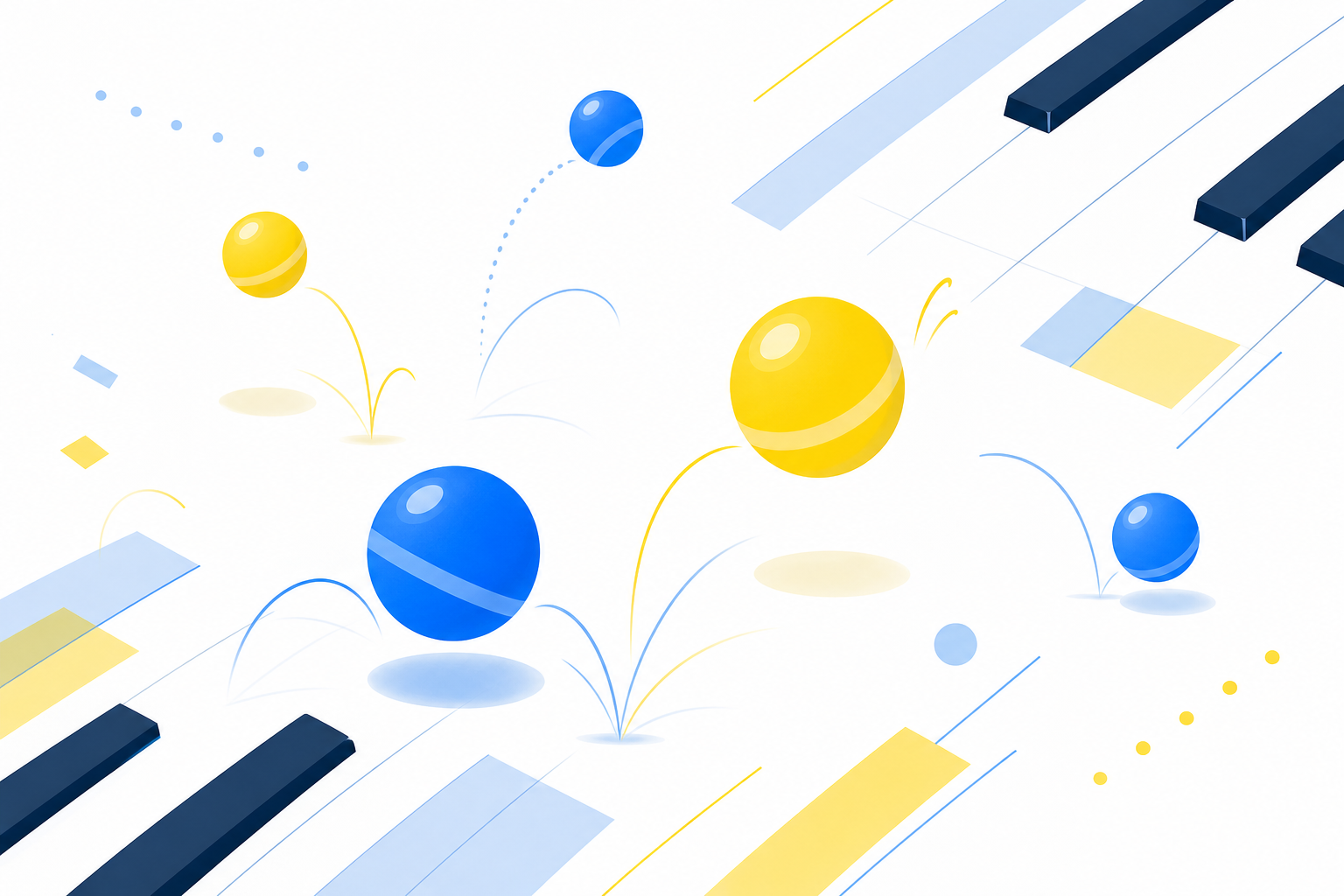
Small point, but worth flagging. The title “Super Ball” delivers the concept through physical memory before you’ve read a single word of meaning into it. A super ball — that little rubber bounce ball from the corner shop, hard when you squeeze it, disproportionately high when you throw it at concrete. Everyone knows the object with their body. The song borrows that reflex and explains its own theme in one beat. Two years on I still think that’s a beautifully efficient piece of titling.
There’s also a strange property to the metaphor. A super ball’s rebound depends on what surface it hits. It flies off concrete. It barely moves on sand. The height isn’t a property of the ball alone; it’s what the ball and the surface do together. That connects to why the song says “stay round” instead of “fight harder alone.” It isn’t about being hard or sharp. It’s about holding a shape that lets the world’s energy come back at you. The unusual thing this pep song does — versus the wall-smashing kind — comes out of that physical picture.
After DEAR MYSTERIES, what “Super Ball” looks like
Here’s the piece I most wanted to leave on the table. Go from DEAR MYSTERIES back to “Super Ball” and the scenery is different. The 2nd album spends more time in small tremors of everyday feeling, in the emotions between people that don’t quite have names. “Lip Noise” pushes the raw texture of the voice right up front. Across two years TOMOO stretched from bright pop into somewhere with more shadow in it.
From that vantage, “Super Ball” — which used to look purely like “bright pop” — is clearly written with the same quiet observer’s eye. There’s a cool distance behind the brightness. The song bounces, but the writer isn’t bouncing with it. She’s a step to the side, watching someone else bounce and writing them down. That’s where the “grown-up” quality of this song lives, I think. It’s easier to name now than it was in 2023.
So if you’re coming to TOMOO fresh in 2025 or later, “Super Ball” doesn’t feel dated as an entry point. If anything it works better as one now — the song where her core is most legible. Two years ago it was the signature. Two years from now it’ll read as the origin. Watching that shift happen in real time is one of the small rewards of following a career while it’s still moving.
What #1 on Kanjam actually did
One layer deeper. Getting picked as #1 in Kanjam‘s year-end pro-selected best-of is a different animal from charting. Charts aggregate plays and purchases, which carry market inertia. A pro’s year-end pick is one working ear casting one independent vote — closer to industry testimony that this is what I actually listened to this year. It works slower than a chart number. It also works longer.
The compound interest on that #1 is now visible. Theme song placements, hall-scale touring, a 2nd album, sustained visibility. A chain of trust that traces back to that vote. “The #1 song from Kanjam‘s year-end” has stayed useful as a shared shorthand when fans recommend her on social. When a TOMOO listener is trying to hand the artist to someone new, this is still the first song they reach for.
One question I’m leaving open
Last thing, for the group chat. Is “Super Ball” actually a pep song, or is it a self-observation song? Is the rebound aimed at someone else, or is it the writer checking her own form in the mirror? People land in different places on this. I lean toward the second reading — which is exactly why it doesn’t feel preachy, and why it can live inside a listener’s routine without pushing. But there isn’t a right answer. What I’m sure of is only this: I hear it differently than I did two years ago. From here it’s yours.
コメント