This is an unofficial fan archive of J-WAVE "TOKIO HOT 100". Not affiliated with, endorsed by, or connected to the program or the artists.
“After seven years” gets thrown around a lot in music press. With this pairing, it lands differently. Nariaki Obukuro and 5lack have put out a joint album, and its lead single — “Icchoura” — is the piece sitting at the center of it. The two hadn’t shared a credit since “Gaia” on Obukuro’s 2019 album Piercing. Now they’re back with an eight-track record built entirely by the two of them, and “Icchoura” is where they open the door.
“Icchoura” isn’t Obukuro and 5lack showing off — it’s the sound of two artists stepping off the skill-flex stage and standing next to each other in their own voices. It’s not a flashy feature. It’s not a headline-grab collab. If you’ve been following either of them for a while, the quiet shock here is how naturally the two voices sit in the same room.
Key facts
- “Icchoura” is the lead track from the joint album of the same name by Nariaki Obukuro and 5lack, released digitally on August 1, 2026.
- First shared credit since “Gaia,” from Obukuro’s 2019 album Piercing — a seven-year gap.
- The album grew from a beat Obukuro had been sitting on for years; the full record came together in roughly three months.
- 5lack handled the mix. Mastering by Isao Kumano (PHONON). Piano by Mayuko Katakura, guitar by Kazuki Isogai, both from Obukuro’s band.
- The pair also staged a two-man live titled Gaia at LINE CUBE SHIBUYA the same day, with a limited LP sold at the venue.
A seven-year gap that wasn’t really a gap
Last shared track: “Gaia” on Piercing, 2019. Since then, both have been anything but quiet — Obukuro dropped Zatto in 2025, and 5lack released Hanazatomai the same year. So the seven years isn’t silence. It’s two people sharpening their own ears separately, then sitting down at the same table again.
The song started with a beat Obukuro had been holding onto for years. Ideas moved back and forth, the groove clicked, and the whole album came together in about three months. That’s actually slow by the standards of collabs now — the era of a beat getting DM’d and a verse landing overnight. These two let it sit. That patience is baked into how the record sounds. And it wasn’t built to live on streaming alone — the album grew out of preparations for their Gaia two-man live on August 1, 2026. The live came first; the record was shaped for it. Naming the show after a seven-year-old track isn’t nostalgia either. It feels more like planting a flag: this is where we’re standing now.
What the title is actually carrying
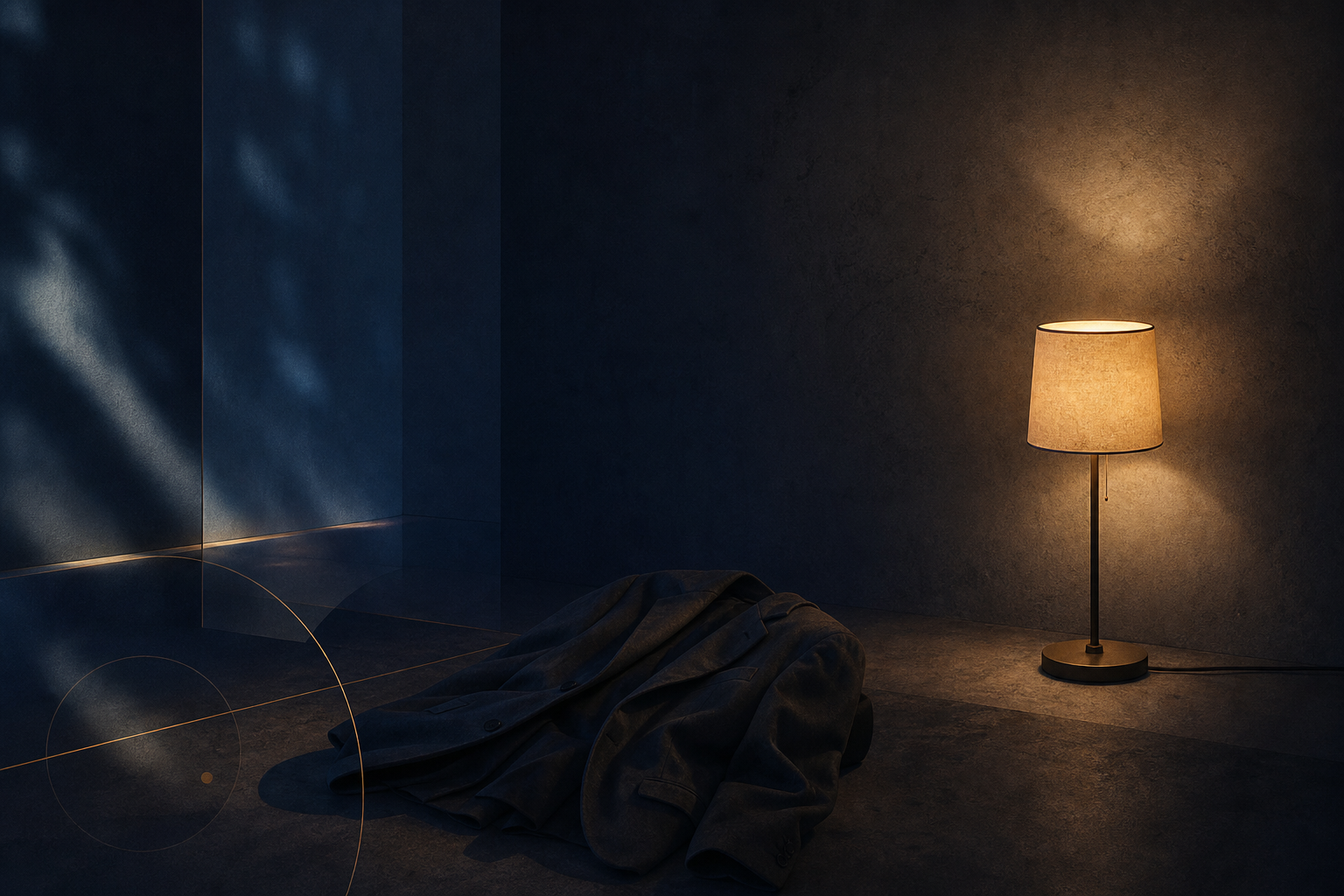
An icchoura is your best outfit — the one you pull out for the day that matters. When an artist names a song this, there’s usually a chest-out declaration behind it: this is my finest. Obukuro and 5lack don’t play it that way. A truly well-cut suit reads plain from across the room; this track works the same way. What you hear is a choice not to stack the top end. No layered hooks angling for a chorus loop. No obvious drop. No three-second moment engineered for a clip. Instead: restrained piano, guitar you can hear breathing, and the distance between the two voices. 5lack mixed it himself; Kumano at PHONON mastered. That mix credit matters more than it might sound — 5lack cut the track so there’s air where the rap needs to sit, and Obukuro’s voice comes forward until it’s almost at the tip of your nose.
Honestly, first listen I was underwhelmed — I was expecting something that announced the reunion. By the second or third pass, it flipped. What I hadn’t caught was how much the two voices are yielding to each other. When Obukuro floats up, 5lack drops low. When 5lack pushes forward, Obukuro pulls back. It’s the breathing of two people handing a mic back and forth on stage. The rhythm placement helps — the gap between kick and snare isn’t the tight, packed grid of a post-trap production. There’s breath in it. Katakura and Isogai aren’t decoration; they’re introducing tiny rhythmic slippage against the programmed grid. Human wobble. That’s why the track reads to hip-hop ears and R&B ears at the same time.
Three things to listen for
- The beat that sat — Obukuro had been holding this one for years. The arrangement barely develops, the loop hardly moves. What changes is the texture. You’re not waiting for a drop; you’re watching the light shift.
- The distance between the voices — Obukuro’s falsetto-leaning vocal and 5lack’s contained rap sit at the same volume. The miking and the mix build a same-room feeling. Put headphones on and you’ll hear it.
- The live players breathing — Katakura on piano, Isogai on guitar. Their slight drift against the programmed grid nudges this from a bedroom rap track into something closer to chamber music.
Where “Icchoura” sits inside the album
Listen to all eight songs in a row and “Icchoura” isn’t the loud showpiece a lead single usually is. “Kagyō” leans into a late-’90s hip-hop mindset with unpredictable turns. “Hōyō” reaches back to early-2000s R&B. Those two carry the pair’s separate upbringings from either side. “Icchoura” sits between them, holding the middle — laying down the shared language before either of them leans into their own dialect. Across eight tracks, it’s not a career retrospective and not a greatest-hits, it’s a sketchbook of the middle language only these two could write. Worth noting: this was originally planned as a shorter EP. Most artists start cutting when a project grows past its plan. These two didn’t. My read is they hadn’t fully found their overlap yet and wanted room to keep looking.
Reading their careers through this one song
This isn’t a reunion. It’s a continuation. Obukuro debuted with Bunriha no Natsu in 2018 and has settled into a lane closer to producer-vocalist than singer-songwriter — known in Japan for co-production work including with Hikaru Utada. From Piercing (2019) to Strides (2021) to Zatto (2025), he’s kept updating his voice a few steps off-center of the mainstream. 5lack has been valued in Japanese rap for a long time on the basis of the voice itself — the tone, before the technique. He handles his own beats and mixes, which puts him closer to Obukuro’s working style than most collaborators. That’s the actual answer to “why these two.”
Compared to the “Gaia” era, the center of gravity has shifted. Seven years ago it was a singer with a rapper stopping by as a featured guest. This time it’s a joint credit — neither the tracklist nor the billing tries to sort who’s the lead. Personal note: when I heard “Gaia” in the winter of 2019, I wanted more from 5lack’s verse. “Icchoura” doesn’t really solve that. But where 2019 me was thinking I want more of this, 2026 me is thinking this is enough. Whether that’s the listener changing or the artists changing, I can’t fully say. Probably both.
The moment of the day this song works
“Icchoura” isn’t a driving-at-night song. It’s an alone-in-your-room song. The BPM doesn’t push. There’s no hook a For You page is going to slice out. Where it lands is that small window between getting home and turning the lights on. Piano resonance, held-back rap, vocals placed almost like a whisper — it doesn’t wake the body up, it softens the outline of the day. Most people will remember this less as the song that hit them first time, and more as the song they kept finding themselves back inside. Lights off, small volume bump, headphones, late. The live is a different beast — what this sounds like standing up at LINE CUBE SHIBUYA on August 1 might be where “Icchoura” fully exists. Frame the recording as a preview and the restraint of the studio version makes even more sense.
Where to go next
This track wasn’t built for a viral peak. Not a TikTok clip song, not an event-driven chart moment — judging it by first-week numbers misses the point. What it has is durability that shows up later. If “Icchoura” is the door, the honest next step is going back to “Gaia” from Obukuro’s Piercing (2019) — the distance between the two voices then and now tells you what these seven years actually did. Open it further and put Zatto (Obukuro, 2025) and Hanazatomai (5lack, 2025) side by side. That’s where the sound of “Icchoura” came from.
The question this song leaves open
One thing worth leaving open. Is “Icchoura” the pair saying this is our finest? Or is it them saying we’re relaxed enough now that we don’t have to dress up for this? You can hear it either way. If it’s the first, the restraint sounds like confidence with nothing to prove. If it’s the second, the empty space sounds like ease. Personally, I think the right way to listen is to keep swinging between those two readings. Two artists back next to each other after seven years, putting on a jacket without saying out loud whether it’s the good one or the everyday one. Fans can pick their own answer — and argue it with the person next to them.
コメント