This is an unofficial fan archive of J-WAVE "TOKIO HOT 100". Not affiliated with, endorsed by, or connected to the program or the artists.
A friend of mine put on a Michael Kaneko record for the first time last year, and halfway through the second song she looked up and asked who it was. There was no big hook, no dramatic moment. She’d just noticed the air in the room had gotten a little softer. He sings barely above a whisper, and somehow the room feels a degree warmer — that’s the Michael Kaneko trick.
Charts tend to reward the loudest voice in the room. His songs do the opposite. Turn the volume down and the edges get sharper, not blurrier. When one of his tracks slips onto the radio between two bigger records, it lingers in a specific way — the kind of afterimage that makes you open the app during the next commercial break and hit play again.
Key facts
- Michael Kaneko is a Japanese singer-songwriter born in Shonan (Chigasaki) and raised in Southern California, who handles his own writing, arranging, and playing.
- He first turned industry heads in 2015 as the vocalist on a Kan Sano-produced J-WAVE station jingle, and sang on TV spots for TOYOTA and Panasonic before ever releasing an official record.
- His 2016 home-recorded demo set Sounds From The Den EP hit No. 1 on the iTunes singer-songwriter chart in Japan.
- He debuted officially with Westbound EP in 2017, dropped his first full-length Estero in 2020, and released the collab album The Neighborhood in 2022.
- As a producer and songwriter, he’s worked with Naotaro Moriyama, Aimyon, CHEMISTRY, Sakura Fujiwara, Yu Sakai, and others.
Two coastlines, one set of ears
Kaneko was born in Chigasaki, on the Shonan coast, and grew up in Southern California. Every profile of him leads with this detail, and honestly, it’s one of those clichés that turns out to be useful. His music has a specific balance of humidity and dryness — a wet coast and a dry coast, coexisting — that makes more sense once you know where the ears were trained.
He’s talked about growing up on his parents’ classic rock and Motown records. Otis, Stevie, the whole ’70s singer-songwriter shelf. Now he’s writing English-forward songs and releasing them primarily into the Japanese market. That’s not a common position. Plenty of Japanese artists sing R&B; not many phrase English the way a first-language listener does, without the seams showing.
His career technically started before his career started. In 2015, when Kan Sano was producing a J-WAVE station jingle, Kaneko sang on it. From there came ad work for TOYOTA and Panasonic, and then, before he’d put out a single record of his own, festival bookings at Fuji Rock and Summer Sonic. Usually it goes the other way. In his case the voice was already circulating through the industry while the discography was empty. Then in 2016, that home-recorded demo collection Sounds From The Den EP went to No. 1 on the iTunes singer-songwriter chart in Japan. Westbound EP made the debut official in 2017.
What “whispery but with a spine” actually means
The words that follow him around in Japanese press are “whispery” and “silky.” Fair enough. But if you’ve been listening for a while, those descriptors feel a little thin.
Here’s what’s actually happening. The breath ratio is never constant. He starts phrases from something close to speaking voice, and then somewhere around the middle of the chorus a lower chest resonance slides in underneath. The percentage of air in the tone shifts inside a single line. That’s why you don’t need to turn him up on the train — the emotional dynamic range is baked into the texture, not the volume.
The other thing worth naming is that he does everything. Writing, arranging, playing, producing. Artists who wear all those hats tend to sing with the volume knob turned inward, because they’re hearing the vocal from the arranger’s chair at the same time. When Kaneko sings restrained, it isn’t shyness. He’s the one who built the empty space in the track, so the vocal already knows how big the room is.
The “modern vintage” thing, broken down
Critics keep tagging his work as “modern vintage,” which is a vague enough phrase to mean anything. If you actually pull it apart, though, here’s what’s going on. The drums and bass are tracked to hit those late-’70s to ’80s tones — you can hear it in the room sound. But the chord voicings, the harmonic choices, the vocal processing? Those are firmly 2020s R&B/neo-soul vocabulary. He’s cutting new shirts out of old fabric.
Genre-wise, he lives at the intersection of AOR, city pop, R&B, soul, and folk. Any single tag only covers half of him. More honestly: acoustic guitar and Rhodes-style electric piano share the lead in a way that lets him swap between English and Japanese lyrics without the arrangement flinching. From The Neighborhood onward, once he committed to Japanese lyrics more seriously, the range of that approach opened up further.
Three records, one arc
If you want to hear how he got here, the cleanest path is: start with Westbound EP, sit with Estero, then use The Neighborhood as the widescreen version.
Westbound EP (2017) was the first proper piece of work for listeners who’d only heard him via commercials or streaming features. He plays close to his influences here, leaning into intentionally older-sounding production. The Michael Kaneko “type” isn’t locked in yet, and that looseness is part of the charm.
Estero (2020) is the midpoint of the career so far and, arguably, the first finished statement. He moves past “here are my roots” and starts writing in a voice that’s unmistakably his. Acoustic instruments and electronic processing sit next to each other without arguing. The full-album format turns out to suit him. A lot of people became fans on this one. I’d bet money on it.
The Neighborhood (2022) is the collaboration record — with Hanaregumi, Ohashi Trio, Yu Sakai, Sakura Fujiwara, and Sarasa. Look at that guest list and it’s almost too on-brand. Every one of those artists is a voice-first singer who isn’t afraid of empty space. It’s also the record where he pushes deepest into Japanese-language writing, testing five different ways how his English-trained melodic instincts negotiate with Japanese vowels and consonants. It doesn’t feel like a guest showcase. It feels like his own writing got updated in the process.
One more to mention: the AmPm feature “Best Part of Us.” That’s the track that got his name onto Spotify viral charts in multiple countries, and for a lot of international listeners it’s the entry point.
The other job: writer and producer for hire
Longtime fans already know this part, but newer listeners often don’t: Kaneko has his hands pretty deep in Japanese pop as a writer and producer. Naotaro Moriyama, Aimyon, CHEMISTRY, Sakura Fujiwara, Yu Sakai, SING LIKE TALKING, Rude-α, Kana Adachi, majiko, AmPm — he’s contributed songs or production across that whole spread. As a solo artist he protects his own color; as a hired writer he’ll adapt to whoever’s in the booth. Not many people on the Japanese indie-to-major spectrum can do both cleanly. Personally, I think this is why he’ll be around for a long time.
He’s also logged live and studio hours with older peers like Ohashi Trio and Hanaregumi. That kind of proximity tends to loosen up your arrangement instincts, and it probably explains why The Neighborhood lands more like a real conversation than a guest-star parade.
Where his music actually lands
This part is a read, not a rule. My honest sense is that Kaneko’s music opens up more in a car at night than on a morning commute. Nothing here is trying to shout, so the half-sealed space of a car interior — that seat-absorbing volume — turns out to be the right size room. At a red light, watching someone cross the street in front of the windshield, the tempo of his songs syncs up with the pace of the world outside in a slightly uncanny way.
Or: 9 p.m. on a Friday, dishes done, dining room light dimmed one notch. That “closing the day” hour. Drop a mid-tempo Kaneko track in there and the air visibly settles. His music doesn’t want to be track one on the playlist. It wants to be track three or four, once you’ve stopped bracing and remembered how to breathe. Long-time fans probably have their own version of “when this works for me” — I’d love to hear yours.
Why this lane matters
Japanese pop in the 2020s is slowly splitting into two lanes: fast-and-bright, and slow-and-interior. Kaneko sits in the strip in the middle. Not fast, not slow, not bright, not dark — and not boring. “Middle without being boring” is, weirdly, one of the leanest zones in the current Japanese scene, which is why a writer like him quietly improves the nutritional balance of the whole ecosystem.
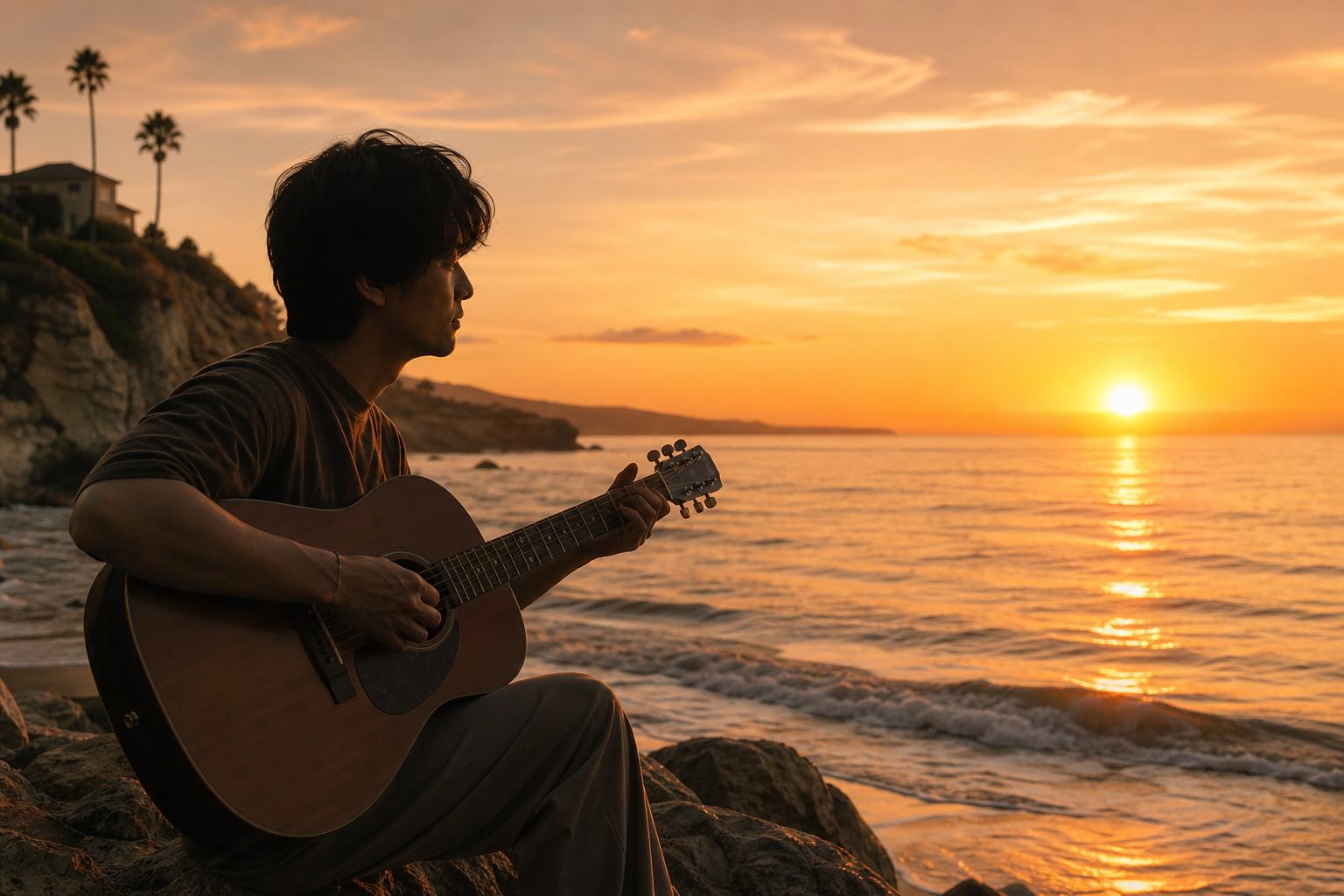
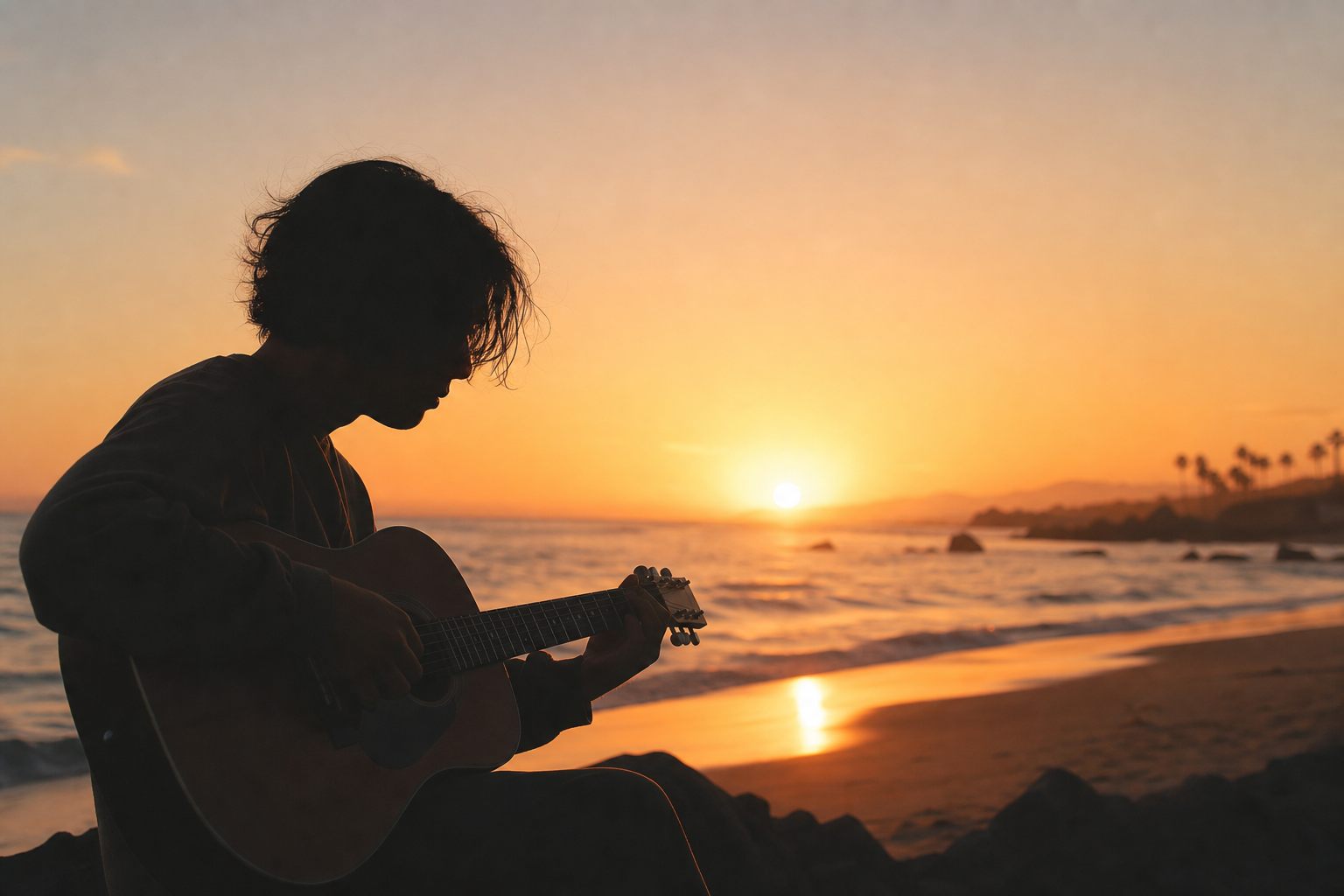
The other rare resource here is the bilingual writing. As Japanese pop keeps sliding onto more international playlists, artists who can act as bridges — records that don’t sound like translations to an English-speaking ear — are still surprisingly few. Kaneko has been reinforcing that bridge quietly, one commercial, one feature, one album at a time. That quietness is its own long game. Live, he suits a coastal, golden-hour setting — the kind of atmosphere a festival like GREENROOM FESTIVAL is built around. Put him in a sweaty basement club at 2 a.m. and it wouldn’t work. Knowing exactly where your music belongs is its own kind of strength.
Where to start
Three things to listen for
- The moving breath ratio — inside one song, the whisper-to-tone balance keeps sliding. Lower the volume and the movement becomes obvious.
- Vintage tracking, modern harmony — drums and bass point at the ’70s and ’80s; the chord choices and vocal treatment are current R&B. That doubled feeling is the addictive part.
- English and Japanese at the same distance — he writes English-first but places Japanese vowels naturally too. The Neighborhood is where you can really hear him working in the second language.
An entry path
Start here: AmPm feat. Michael Kaneko, “Best Part of Us.” Get the texture of the voice through the feature first, and the solo records land more easily afterward.
Then this album: Estero. Best experienced in a car at night, or with the lights turned down at home.
Then go deeper: The Neighborhood. Through the pairings with Hanaregumi, Ohashi Trio, Yu Sakai, Sakura Fujiwara, and Sarasa, you get to hear how he writes alongside other voices.
A question to leave with
For anyone who’s been following Kaneko for a while, here’s a question I keep chewing on. The Shonan side of him and the Southern California side — which one do you hear more in the current work? My guess is that the answer splits pretty evenly along Estero-favorite vs. The Neighborhood-favorite lines. There’s no right answer. But running the question through your own listening once tends to change how you hear the next release when it drops. At least, that’s how it’s worked for me.
Whether you’re finding him on the chart this week for the first time, or you’ve been on board since the ad-jingle years, the honest read is the same: this is a writer still at the halfway mark. Session work and solo records, English and Japanese, Shonan and the West Coast — the music that comes out of that back-and-forth is going to keep shape-shifting, and getting to watch it happen in real time is the perk of being a same-era listener. For anything official, check his own channels.
コメント