
This is an unofficial fan archive of J-WAVE "TOKIO HOT 100". Not affiliated with, endorsed by, or connected to the program or the artists.
Sometimes a song’s chart position and its actual center of gravity don’t line up. Gen Hoshino’s Ikidomari is one of those. No big hook, no obvious 15-second TikTok cutout, no call-and-response chorus. And yet, weeks after release, it keeps re-tuning itself in your ears every time you come back. A singer who decided not to sing about himself somehow ends up tracing your outline more sharply than any confessional song could. That’s the strange thing about this one.
Key facts
- Released to streaming on November 14, 2025 as the theme song for the film Hirabe no Tsuki.
- His first new song since the album Gen (May 2025) — about a six-month gap.
- Stripped-back production: piano and vocal only, nothing else in the mix.
- Project started when director Yutaka Doi and producer Jun Nasuda visited Hoshino’s private 808 Studio and asked him directly.
- Hoshino has said on the record this is not a song about himself — it’s first-person, but sung from a character.
- The song gets stronger two weeks after you first hear it
- What “not singing about myself” actually means here
- Just piano and voice — how to read the choice
- The gravity of Hirabe no Tsuki
- Where this sits in his catalog
- When it actually works, and where fans will split
- Listen on a different clock than the chart
The song gets stronger two weeks after you first hear it
Honest read: Ikidomari hits harder on week two than on day one. When it first showed up, most people probably heard it folded into the film — the trailer voiceover, the visuals of Masato Sakai and Haruka Igawa, that muted small-city light. It arrived as part of a package. Mine did too. Then you play it end to end on streaming and something shifts. A song that had been sitting beside the film quietly walks out of it. That’s unusual for Hoshino — Koi and Kigeki were locked to their tie-ins from bar one. Ikidomari works the opposite way. The more time passes, the further it drifts from the movie, which, if you’re a late arrival, is lucky. The skeleton is easier to see once the film’s heat cools.
What “not singing about myself” actually means here
With a little distance, this might turn out to be a mode-switch marker. His release-day comment lands differently now: recently he’d been writing songs that pressed his own image directly into the recording, but Ikidomari isn’t that — it’s a first-person story where the “I” is a character. When he says “pressing myself in,” he’s probably pointing at the run that starts around Sozo in 2021: Ain’t Nobody Know, Eureka, and this May’s self-titled album Gen, which he described as something close to a living self-portrait.
Right after that, he picks a first-person voice that isn’t his. The order matters. Calling this a “new phase” isn’t wrong — but it’s less about opening a new drawer, more about closing one. On drama and film sets he’s spent years training to erase himself and become the vessel for someone else. That muscle hadn’t really shown up in his music. On Ikidomari, for the first time, it does. Actor-Hoshino and musician-Hoshino sit down at the same table.
Just piano and voice — how to read the choice
First impression: stark. Piano and vocal, nothing else — no pad, no strings, no rhythm section. This is the same Hoshino who’s spent the last few years sharpening his rhythmic vocabulary with Louis Cole, Sam Gendel, and Sam Wilkes. If you know that range, this feels almost monastic. The left hand leans on simple triplet or eighth-note pulses. Places a session pianist would instinctively fill, he leaves open. Same with the vocal — barely any melisma, straight lines placed cleanly on the beat. Most singers want to color it. He refuses.
The refusal is the first-person conceit. Load too much of the singer’s personality onto the vocal and it stops being the character’s voice. To build this as a nameless someone’s monologue rather than a “Gen Hoshino song,” the decoration had to go. Given that Yutaka Doi also made We Made a Beautiful Bouquet and The Voice of Sin, the restraint reads less as aesthetic and more as a match with the director’s temperature. The piano is miked close — you can hear the mechanical bite of the hammer just before it hits the string. Hoshino has been leaning further into home DAW production since around 2020, so this “subtractive” mix isn’t about gear limits. It’s a decision. The moment I keep rewinding to sits in the bridge, where the arrangement thins out to a single note’s decay — one bar, like a cutback in a film.
Three things to listen for
- The stripped piano. Plain voicings; space built by pedal decay rather than layered instruments. On headphones you can hear the touch of the right hand.
- The straightness of the vocal. His usual sweet wobble is dialed down; the vowels sit dead center. Holding back the runs keeps the character’s outline intact.
- The short runtime. Under three minutes, no repeat-chorus loop. It ends when the story arrives, not when a hook has been hammered in enough times.
The gravity of Hirabe no Tsuki
Hirabe no Tsuki is Kasumi Asakura’s 2018 novel, winner of the 32nd Yamamoto Shugoro Prize, with more than 200,000 copies in print. The premise is simple: a man and a woman who were classmates in middle school reconnect in middle age. As the title (“level ground”) suggests, it doesn’t run on dramatic incidents. Writing a theme song for material like that is hard — a big song floats above it; too intimate a song vanishes inside it. What Hoshino did was stand next to the film and look in the same direction.
The way the job started tells you something. Doi and Nasuda came to his 808 Studio in person and pitched him directly — not a request pushed down from a marketing department, but a promise between two working artists. Doi has deep roots in Japanese TV drama; in film he’s made We Made a Beautiful Bouquet and The Voice of Sin. Not the guy who drags you through big incidents; the one who makes you cry over small shifts in room temperature. Screenplay by Kosuke Mukai, who adapted A Man. It also matters that Hoshino knows a film set as an actor — he was on Doi’s NHK drama Idaten.
Where this sits in his catalog
Gen, his sixth original album, came about six and a half years after POP VIRUS — the longest gap in his discography. It bundled the singles from the Koi era onward with newer material and played, functionally, like a career summary. If Gen is that summary, Ikidomari is page one of what comes after. Fifteen years in, with Koi, SUN, Idea, and Kigeki stacked behind him, he looks like he’s putting all of it into brackets on purpose. This isn’t a song built to chart. It’s a doorway. Hoshino has always turned corners this way — he doesn’t announce a pivot with one single, he layers slowly, and by the time you look up he’s standing somewhere else.
When it actually works, and where fans will split
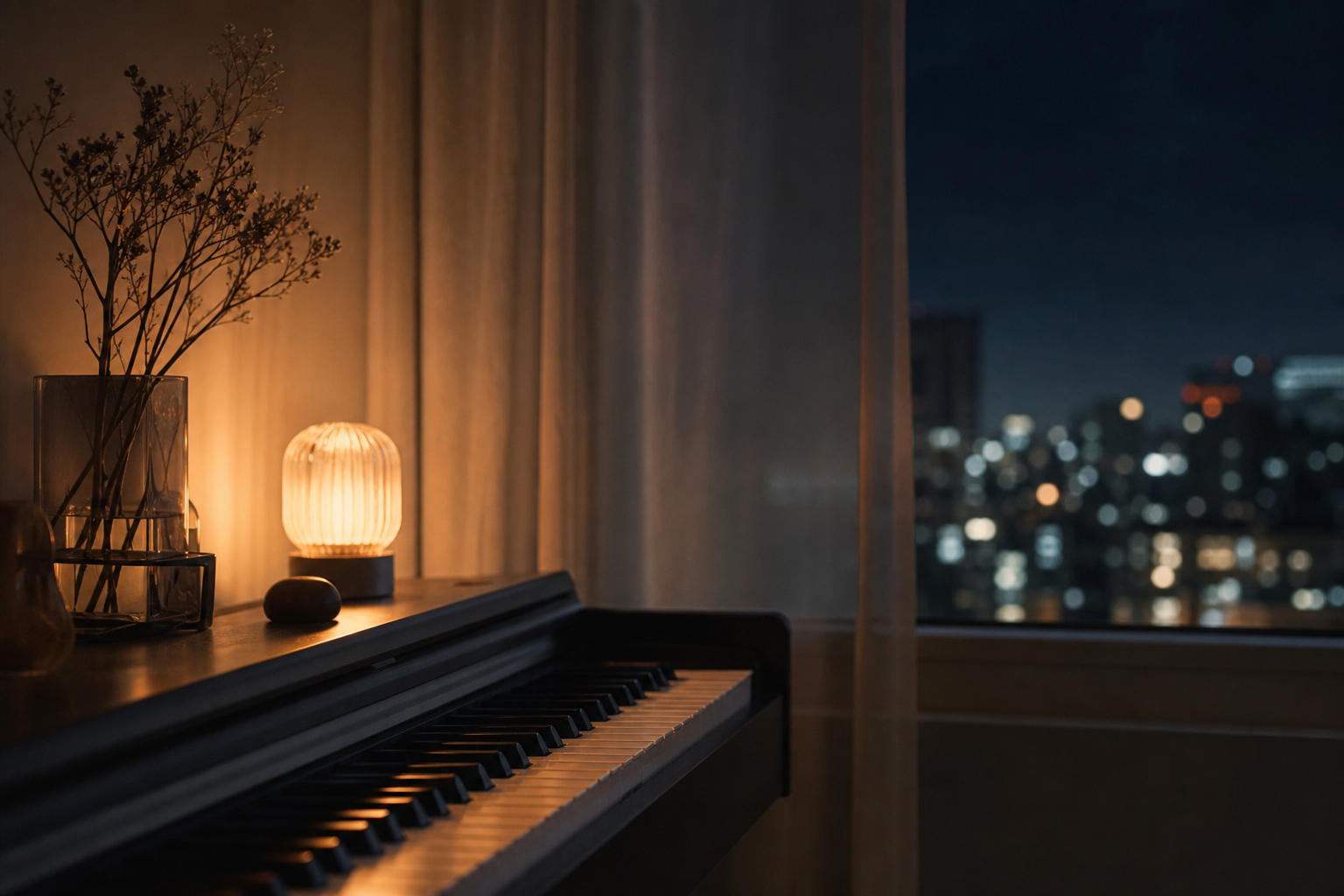
Ikidomari feels designed for the hour when you’ve turned one lamp off in the room. On a morning commute it’s too heavy — too dense for the train. But at night, the last thirty minutes before bed, when the day is packed away and your hands are idle, it fits almost eerily well. A song built on a first-person narrative kind of asks the listener for their own alone-time too.
There’s one clean fault line, though. If you’ve loved Hoshino for his pop-brightness, for the danceable playfulness of the Koi-era stuff, Ikidomari is very obviously the other side — that springy funk feel isn’t in the room here. My own take: the quiet has always been in the root system of his pop. The shape of his early solo work — Barabara, Kudaranai no Naka ni — has come back in different clothes. But this is genuinely open to argument. “No, this is a different mode, not a callback” is a valid read too.
Where to go next
Next song: Barabara, from early in his solo career. Acoustic skeleton, first-person quiet — same underground current as Ikidomari. Related album: Gen (May 2025). Sixth original album, about six and a half years after POP VIRUS, sixteen tracks including four title singles and digital singles. Worth sitting with as the landscape right before Ikidomari.
Listen on a different clock than the chart
Most songs in the TOKIO HOT 100 zone climb through short-video hooks and repeated TV exposure. Ikidomari isn’t playing that game — it’s connected to a film campaign, but it doesn’t land via hook. Watching its week-to-week position rise and fall kind of misses the point. Months from now, you might notice on your playlist that its play count has quietly climbed back up. Songs that last usually keep some fans outside the first wave of heat.
Hits from the first half of the 2020s have skewed toward a 15-second-chorus-first design built to travel on TikTok. Ikidomari, at 2:47, ends on the story’s arrival point instead of looping a hook. It tries to leave an afterimage after a single listen. Long-time Hoshino listeners will quietly nod at this: he’s updating the career not by adding more, but by cutting more away. So — is this the doorway to the next five years, or a beautiful side trip? I’m leaning doorway. Where are you landing?

コメント